Shyness is a temperament, not a flaw
Some children walk into a new room and immediately join the loudest game; others stand quietly beside a parent, watching the room for ten minutes before stepping forward. Being a slow-to-warm-up observer is a completely healthy temperament.
Our goal is never to turn a quiet child into an extrovert. Instead, we want to give them a few reliable social scripts and calm experiences so they feel safe speaking up when it matters.
Three short scripts worth practising through stuffed-animal play
When a child feels nervous in a real classroom, their mind can go blank. Practising simple phrases at home with teddy bears or toy figures turns those words into muscle memory:
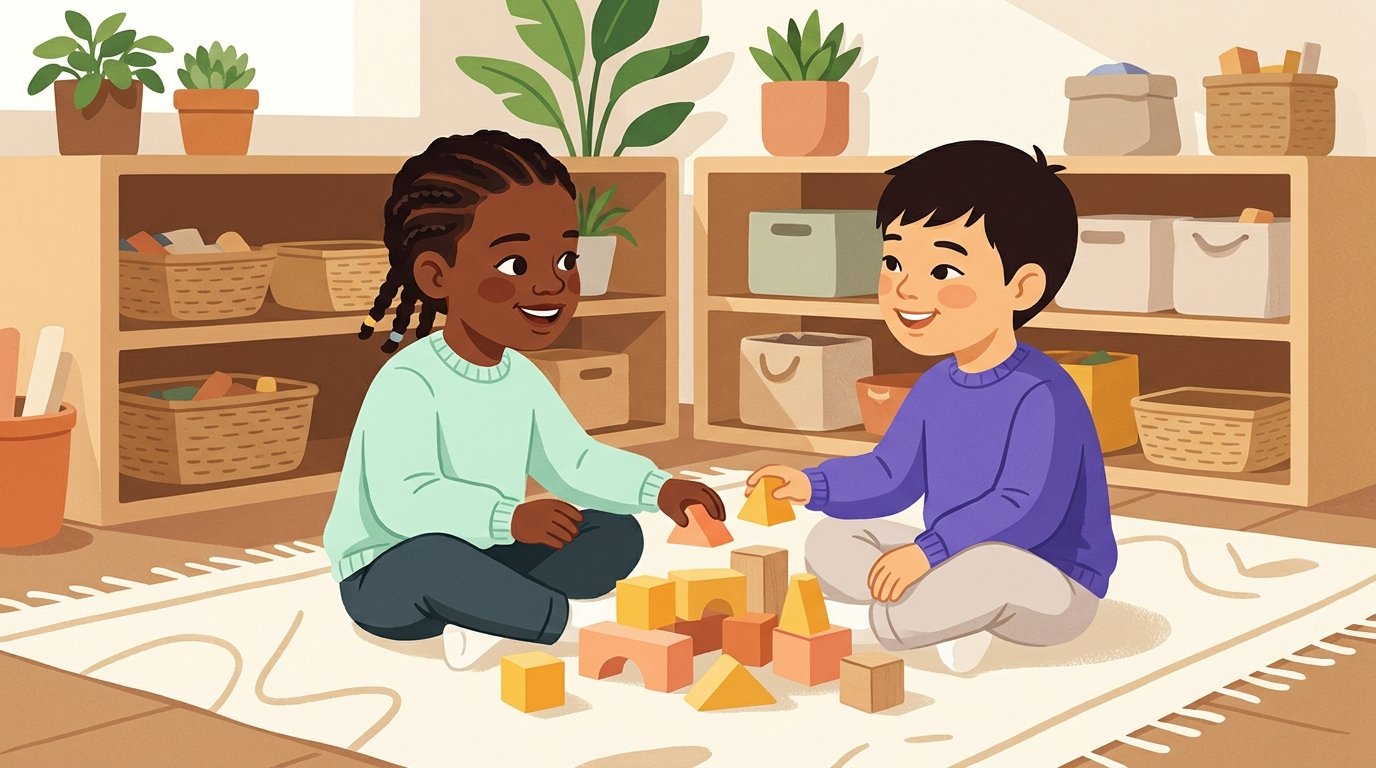
- Joining play: “Can I play too?” or “Can I build next to you?”
- Taking turns: “When you’re finished, can I have a turn?”
- Asking a teacher for help: “Excuse me, I need help opening this,” or “Where is the bathroom?”
Start small with low-pressure playdates
Large noisy birthday parties can overwhelm cautious preschoolers. A 45-minute one-on-one playdate at a park or your living room—with two clear activities ready, like building a train track or painting—gives your child space to connect without sensory overload.
Teach “feelings weather” at home
Children who can name their feelings are far less likely to freeze or lash out when overwhelmed. Try a quick morning check-in using weather words: “My tummy feels a bit windy today—I’m a little nervous about the new swimming class.” When you model naming your own mild worries calmly, your child learns that nervous feelings are normal and manageable.