Sound Safari
Find everyday objects around the room that start with the same beginning sound.
Start full quest✷ USA PRESCHOOL, PRE-K & KINDERGARTEN READINESS · AGES 3–6
Build kindergarten readiness at home or in the classroom with 28 hands-on quests, narrated kids’ learning games, a weekly school-readiness planner, and USA general knowledge quizzes.
Browse by stage (Preschool, Pre-K, Kindergarten), age band, and skill—or print any activity before signing up.
Find everyday objects around the room that start with the same beginning sound.
Start full questBuild little towers while matching spoken numbers to real block quantities.
Start full questUse weather pictures to talk about big emotions and practise asking for help.
Start full questDesign and test a sturdy mini bridge using cardboard, cups, and toy animals.
Start full questOrder three picture cards to tell a short story with a clear beginning, middle, and end.
Start full questArrange colourful snacks or buttons into repeating AB and AAB patterns.
Start full questPinch wooden clothespins around a bowl rim to build pencil-grip finger strength.
Start full questPractise waiting, cheering for others, and handling wobbly tumbles gracefully.
Start full questPair rhyming household items or silly words to sharpen reading readiness.
Start full questHunt for circles, squares, triangles, and rectangles hiding in everyday objects.
Start full questPractise safe scissor control by snipping paper strips into colourful confetti art.
Start full questBuild classroom confidence through simple two-step independence routines.
Start full questPredict whether everyday waterproof objects will sink to the bottom or float on top.
Start full questExplore light, size, and storytelling by casting hand and toy shadows on a wall.
Start full questUncover hidden textures in nature using paper and unwrapped crayons.
Start full questRecognize and order the letters in your child’s own name using paper tiles.
Start full questClap, stomp, or tap wooden spoons to count the beats inside favourite words.
Start full questDescribe hidden objects using touch-only words like smooth, bumpy, soft, or round.
Start full questPractise estimating “how many” before counting a scoop of pompoms or pasta.
Start full questMatch pairs by colour, size, and pattern while helping with real family laundry.
Start full questJump from number pad to number pad while calling out numbers forward and backward.
Start full questRoll, pinch, flatten, and poke playdough to build strong hand arches and finger muscles.
Start full questPeel painter’s tape to build zig-zag roads for toy cars—or a tightrope for little feet.
Start full questDraw a cheerful thank-you picture and deliver it to a family member, neighbour, or teacher.
Start full questDiscover the 50 stars, 13 stripes, Bald Eagle, and Statue of Liberty through hands-on art and counting.
Start full questSort pennies, nickels, dimes, and quarters in a pretend US grocery store to learn coin names and values.
Start full questPractice knowing your full name, parents’ names, and how US emergency number 911 works through calm pretend play.
Start full questExplore US geography, your home state, and the four seasons (Spring, Summer, Fall, Winter) with a weather wheel.
Start full quest🎮 FREE SAMPLES BEFORE SIGN-UP · KID-SAFE & UNTIMED
Play narrated activities for letter sounds, counting, shapes, patterns, vocabulary, listening, and Explore science—or print a free sample activity sheet right away.
🎒 TRANSITION GUIDES
Practical guidance tailored to each early childhood stage in the United States.
Calm, practical steps to ease separation at drop-off, build comfort routines, and partner with caregivers.
Starting child care is often a child’s very first regular routine away from home. Focus on predictable goodbye rituals (a quick hug, a wave at the window, and reassuring words like “I always come back after snack”), labeling comfort items, and practicing simple self-help moments like drinking from an open cup or washing hands together. Share your child’s favorite soothing words and nap cues with their caregiver during the first week.
Build curiosity, group listening, bathroom independence, and playful turn-taking before preschool begins.
Preschool and Pre-K classrooms thrive on curiosity, short circle-time stories, and social play. Practice sitting together for a 5-minute picture book, taking turns rolling a ball or stacking blocks, zipping a backpack, and opening lunch containers. Remind your child that asking a teacher “Can you help me?” is always welcome.
Support two-step directions, early phonics, counting, US safety basics, and confident classroom transitions.
US kindergarten teachers look for children who can listen to a short story, follow two-step directions (“Hang up your coat, then sit on the rug”), recognize their own name, count everyday objects to 10, and express feelings with words. Check your local school district’s kindergarten entry cutoff date early, as US states vary widely between August 1, September 1, and December 31.
★ MILESTONE ROADMAP
Every child grows at their own pace. Use this gentle checklist to spot everyday strengths and pick quests that fit.
📖 PARENTING & TEACHING GUIDES
Practical, research-aligned ideas for turning ordinary moments into playful learning.
Why recent U.S. Government Accountability Office findings and 20-year pre-K research point families toward independence, play, and early district planning.
Read guide
Discover why playful, hands-on routines build stronger kindergarten readiness than flashcards—and how 10 minutes a day makes a lasting difference.
Read guide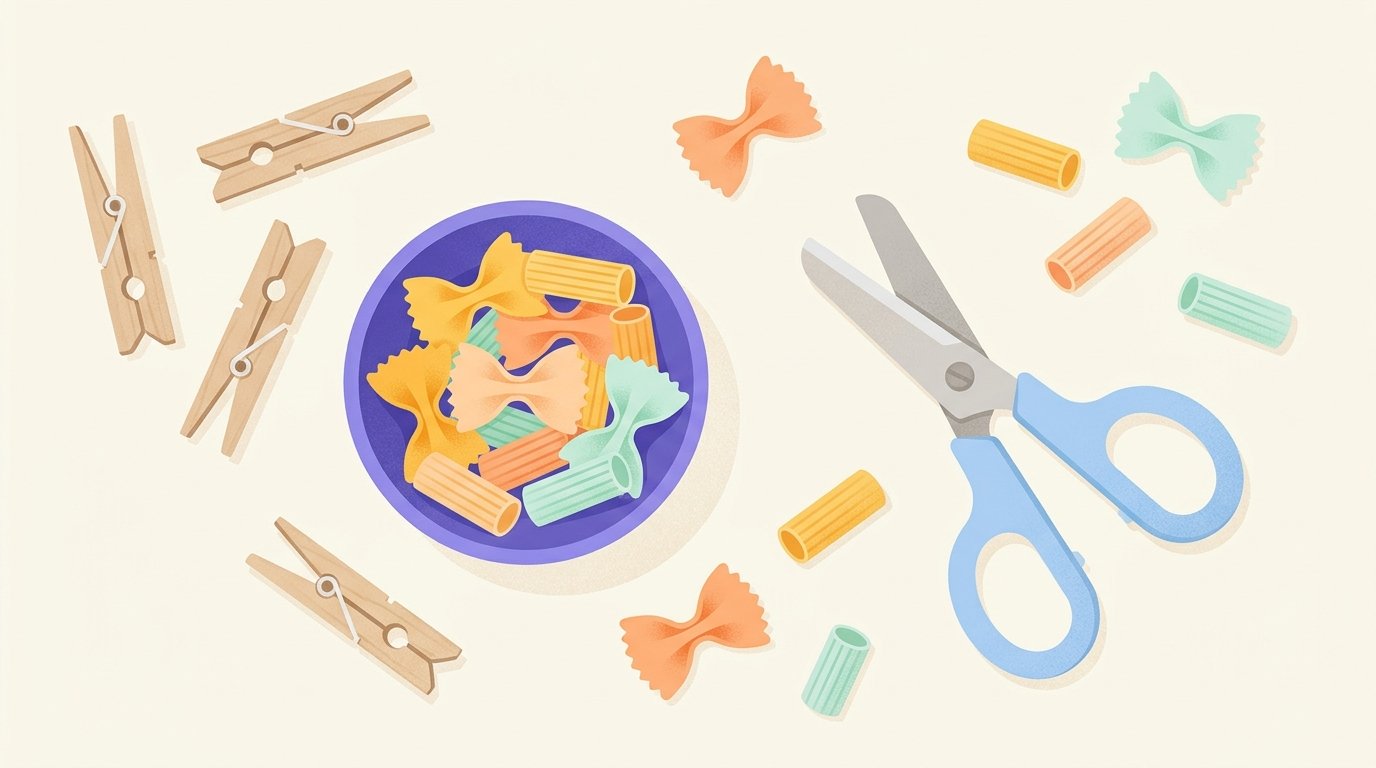
Build pencil-grip strength and hand-eye coordination before preschool using clothespins, pasta, spoons, and bowls you already have at home.
Read guideLet your child choose a quest. Pick a time when you can play together without rushing.
Model the first step, then let your child try. Use fewer items or repeat a favourite quest if they need more practice.
Tell your child what you saw them do, such as counting each block carefully or trying a new way to build.
Just 10 to 15 minutes of relaxed, focused play is plenty for ages 3 to 6. Short, joyful sessions build curiosity and confidence without overwhelming young attention spans.
No. Every quest is designed around everyday household items such as blocks, crayons, scrap paper, wooden clothespins, snacks, or picture books.
That is completely normal. Kindergarten teachers value listening skills, curiosity, emotional expression, turn-taking, and finger strength just as much as early letter or number recognition.
Yes! Early years teachers and childminders use these quests as quick morning-table invitations, small-group centres, and circle-time warm-ups.
Your progress is saved privately in your current browser using local storage—no account or sign-up is required.